
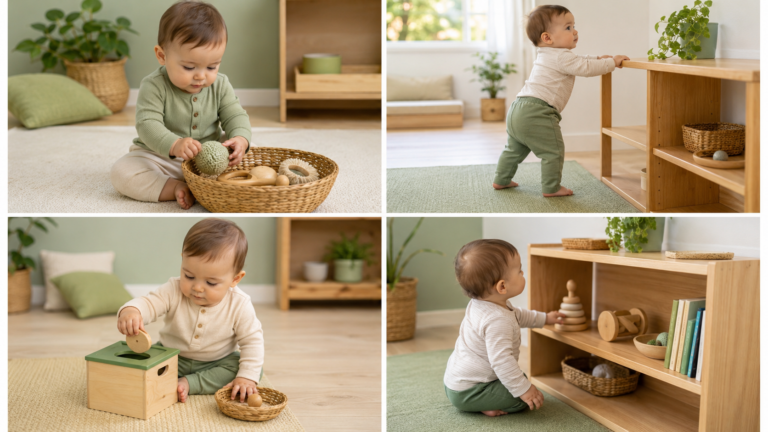
Between 6 and 12 months, babies often become more active, curious, and eager to explore. A Montessori approach at this stage focuses on safe movement, observation, simple materials, language, mealtimes, and family connection.
Please note: This article is for general information only and is not a substitute for medical, developmental, sleep safety, or feeding advice. Always follow current safe sleep, child safety, and feeding guidance from your child health nurse, paediatrician, or qualified professional.
Montessori Development from 6–12 Months
At this stage, many babies are becoming stronger in their neck, arms, hands, and legs. They may roll, reach, sit, crawl, pull up, or begin exploring their environment in new ways.
Every child develops at their own pace. The goal is not to rush development, but to provide safe opportunities for movement, discovery, and independence.
Maria Montessori recognised the connection between movement, learning, and brain development. For babies, reaching, grasping, crawling, and exploring real spaces are all meaningful forms of learning.
Montessori Environment for 6–12 Months
A simple movement area can be very helpful during this stage. This may be a soft mat placed in a family room or another safe area where your baby can move freely while supervised.
The environment should be calm, safe, and easy to explore. A low shelf with a few carefully selected materials is often more helpful than a large box full of toys.
Simple Environment Ideas
- Use a soft movement mat for supervised floor time.
- Place a low, safe mirror where your baby can observe their reflection.
- Offer a few simple toys or materials in small baskets.
- Keep the space uncluttered and easy to explore.
- Allow your baby to be near family life, voices, and everyday routines.
A mirror can be especially interesting at this age. Babies may enjoy watching their reflection, observing their movements, and gradually becoming more aware of their body.
Freedom of Movement and Safety
Montessori environments support freedom of movement, but this must always be balanced with safety.
As babies begin to roll, crawl, pull up, or reach for objects, parents may need to carefully review the home from the baby’s perspective.
Helpful tip: Get down on your hands and knees and look around the room from your baby’s level. This can help you notice potential hazards that may not be obvious from adult height.
Things to Check Carefully
- Loose wires or cords
- Tablecloths that can be pulled down
- Light furniture that could tip over
- Floor lamps or unstable objects
- Power points and small openings
- Small objects that could be placed in the mouth
- Anything sharp, fragile, or unsafe within reach
The aim is not to confine the baby unnecessarily, but to create a safe space where they can explore with confidence and supervision.
Floor Beds and Sleep Space
In Montessori, floor beds are often mentioned because they can support freedom of movement and allow a child to access their environment more independently as they grow.
However, sleep safety should always come first. If you are considering any sleep arrangement, including a floor bed, make sure it follows current safe sleep recommendations and is suitable for your baby’s age, development, and home environment.
The broader Montessori principle is to respect the child’s need for rest while also supporting safe, age-appropriate independence.
Low Shelves and Order
At this age, babies benefit from order and simplicity. Instead of placing all toys in one large box, try offering a small selection of materials on a low shelf or in individual baskets.
This helps the child begin to see where things belong and makes it easier for them to choose one item at a time. It also reduces overwhelm and supports concentration.
A Simple Shelf Setup
- Choose 4–6 safe materials at one time.
- Place each item in its own basket or space.
- Rotate materials when your baby loses interest.
- Keep the shelf low, stable, and accessible.
- Avoid overcrowding the space.
Montessori Materials and Toys for 6–12 Months
Babies at this stage do not need many toys. A few well-chosen materials can support movement, grasping, reaching, coordination, and curiosity.
Low Table, Shelf, or Stable Furniture
As babies begin to pull up, they may try to use furniture for support. Any furniture within reach should be stable and safe. A low, sturdy shelf, sofa, or table may support this stage, but always check that it cannot tip or move unexpectedly.
Balls
Balls are simple and engaging. Babies may grasp them, watch them roll, crawl after them, or pass them from hand to hand.
A small basket of different textured balls can offer variety while keeping the space ordered.
Examples may include:
- Soft fabric balls
- Crocheted balls
- Rubber textured balls
- Lightweight soft balls
Push or Pull Materials
Some babies enjoy pushing objects as they become stronger. If using a wagon or push toy, make sure it is stable, age-appropriate, and used safely.
Avoid anything that moves too quickly or could increase the risk of falls.
Simple Grasping Materials
Wooden rattles, soft toys, cloth books, and safe household-inspired materials can support hand use and exploration.
Always choose items that are safe for mouthing and appropriate for your baby’s stage.
A Note on Walkers and Baby Equipment
In Montessori, babies are usually given opportunities for natural movement rather than being placed for long periods in equipment that limits exploration.
Items such as prams, carriers, slings, and high chairs can be useful for practical family life, but it is helpful to balance their use with plenty of supervised floor time.
If considering walkers, jumpers, swings, or similar equipment, check current safety guidance and speak with a qualified professional if you are unsure.
The general Montessori preference is to allow babies to develop movement naturally, at their own pace, in a safe prepared environment.
Weaning and Mealtimes
Around this age, many babies begin showing interest in food. Readiness can vary, so it is important to follow feeding guidance from your health professional and observe your child’s signs of readiness.
A Montessori approach to mealtimes encourages consistency, calm, and participation.
Simple Montessori Mealtime Ideas
- Create a consistent place for meals.
- Allow enough time so meals do not feel rushed.
- Invite your baby to be part of family mealtimes where possible.
- Use simple, child-appropriate dishes and utensils when suitable.
- Keep the experience calm and positive.
The goal is not only eating, but also helping the child gradually experience mealtimes as a meaningful part of daily family life.
Language Development from 6–12 Months
During this stage, babies often become more vocal. They may babble, respond to familiar voices, imitate sounds, and begin to understand the rhythm of communication.
A simple way to support language is to speak clearly and naturally. You do not need to use exaggerated baby talk. Instead, talk to your baby as a person who is listening, learning, and absorbing language.
Ways to Support Language
- Pause after speaking and allow your baby time to respond.
- Imitate some of your baby’s sounds in a playful way.
- Name objects clearly during daily routines.
- Describe what your baby is seeing or doing.
- Read simple books and point to one object at a time.
This dance of communication helps the baby experience conversation as a back-and-forth exchange.
Respecting Sleep and Daily Rhythm
Babies need rest, and sleep patterns can vary widely during this stage. A Montessori approach encourages respect for the child’s rhythms while also keeping sleep safe and appropriate.
Some families work toward helping their baby fall asleep with fewer external supports over time. However, sleep is personal and developmental, and what works will vary from family to family.
If you have concerns about sleep, settling, feeding, or development, it is best to seek advice from a qualified health professional.
Key Takeaways
From 6–12 months, Montessori at home is mainly about safe movement, simple materials, observation, language, and connection.
- Offer supervised floor time and freedom of movement.
- Keep the environment safe, calm, and uncluttered.
- Use low shelves and small baskets instead of large toy boxes.
- Choose a few simple materials that support grasping, movement, and exploration.
- Talk clearly and respectfully to support language development.
- Follow safe sleep and feeding guidance from qualified professionals.
At this age, Montessori is not about doing more. It is about preparing a safe, thoughtful environment where your baby can explore, move, connect, and develop at their own pace.