
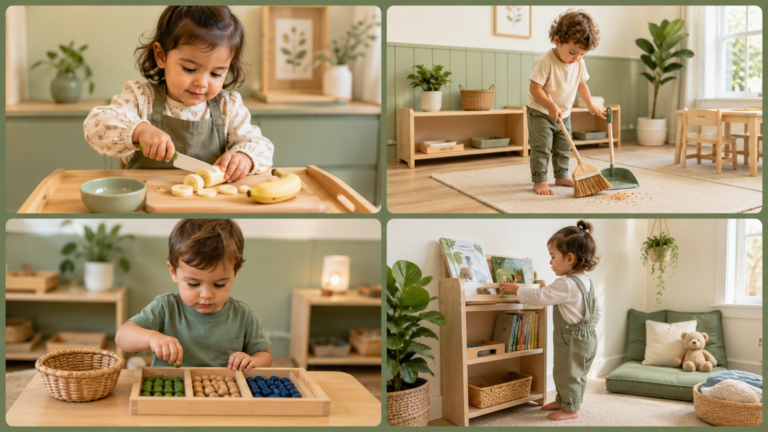
Between 24 and 36 months, children are often becoming more independent, more expressive, and more eager to do things for themselves. This stage can sometimes feel challenging for parents, but many behaviours at this age are connected to growing independence, communication, and self-development.
A Montessori approach at this stage focuses on choice, independence, practical life, respectful guidance, language, and a prepared home environment.
Please note: This article is for general information only and is not a substitute for medical, developmental, behavioural, feeding, or safety advice. Always speak with your child health nurse, paediatrician, or qualified professional if you have concerns about your child’s development, behaviour, or wellbeing.
Montessori Development from 2–3 Years
Children at this age often want to do more for themselves. They may want to choose clothes, help prepare food, clean up spills, wash their hands, climb, carry objects, or take part in family routines.
This growing independence can sometimes lead to power struggles. One helpful Montessori strategy is to offer limited choices. This gives the child some control while still keeping clear boundaries.
For example, instead of asking, “What do you want to wear?” you might ask, “Would you like the red jumper or the blue jumper?”
The goal is not to give unlimited freedom, but to create opportunities for independence within safe and respectful limits.
Montessori Environment for 2–3 Years
The environment is especially important at this stage. A child who can access materials, clothing, utensils, and simple tools is more likely to participate and complete tasks independently.
The key is to prepare the home so the child can succeed safely. This often means breaking tasks into small steps and arranging the environment so the child can see what to do next.
For adults, this may feel slow at first. For the child, these small steps are important opportunities to build confidence, coordination, and self-esteem.
Simple Environment Ideas
- Use low shelves for toys and materials.
- Keep each activity in its own basket or tray.
- Offer child-sized furniture where possible.
- Provide access to simple self-care items.
- Use limited choices to reduce overwhelm.
- Keep routines predictable and calm.
Bedroom Setup
At this age, the bedroom can support independence in sleeping, dressing, and caring for personal belongings.
A child may sleep in their own bed, depending on the family’s preferences and current safety guidance. If a bed is higher, some families choose to place a soft mat or mattress nearby as a precaution. Always make sleep and room setup decisions based on current safety advice and your child’s stage of development.
Bedroom Setup Ideas
- Use low shelves so your child can choose materials independently.
- Place toys in separate baskets so each activity has a clear place.
- Offer only a small number of toys or materials at one time.
- Use a low drawer or basket for clothing choices.
- Encourage your child to return items when finished.
Children at this age often benefit from external order. When the room is organised, the child is better able to develop their own sense of internal order.
A small clothing drawer can allow your child to choose what to wear. To keep choices manageable, offer two weather-appropriate options, such as a red jumper or a blue jumper.
Bathroom Setup
The bathroom can support self-care and independence when items are accessible and arranged in a clear order.
A bedtime or morning routine may include sitting on the potty, washing hands, brushing teeth, and putting away bath toys. These routines are easier when the child can reach what they need safely.
Bathroom Setup Ideas
- Use a stable step stool so your child can reach the sink.
- Keep a child-sized toothbrush and toothpaste within reach.
- Place items on a small tray in the order they are used.
- Use a low towel hook so your child can hang their towel.
- Provide a small bottle of soap or shampoo with only a little inside.
- Use a small net or bag for bath toys so your child can help put them away.
A simple tray can help make the routine more visible. For example, from left to right, you might place a toothbrush, toothpaste, and cup.
Small amounts of soap or shampoo can reduce waste while still allowing the child to participate.
Living Area Setup
The living area can include a small shelf for materials your child may use while near the family. This allows the child to participate in family life while still having a defined space for their own work and play.
Living Area Setup Ideas
- Use one small shelf for accessible toys or materials.
- Provide a child-sized table and chair for activities.
- Offer large crayons or simple craft materials when appropriate.
- Use a small rug or mat to define the work area.
- Keep messy activities, such as painting, outdoors or in an easy-to-clean area.
A small mat can help children understand that their work belongs in a specific space. This supports order and makes clean-up easier.
Dining Area Setup
At this stage, many children can participate more actively in family meals. They may sit with the family, help set the table, use simple utensils, or begin serving small portions with support.
A Montessori approach encourages the child to be included in the social experience of mealtimes where possible.
Dining Setup Ideas
- Invite your child to sit with the family during meals.
- Provide access to a low drawer with child-sized plates, cups, and utensils.
- Use real but lightweight dishes if suitable for your child and home.
- Provide a placemat showing where the plate, spoon, fork, and cup belong.
- Allow your child to help carry safe items to the table.
Some families use a high chair at the family table, while others use a small child-sized table and chair. The best option depends on your child, your home, and safety considerations.
Real dishes can help children learn care and responsibility, but this should always be introduced thoughtfully and with supervision.
Montessori Materials and Toys for 2–3 Years
Children aged 2–3 often enjoy materials that support order, movement, language, creativity, and practical life. The best materials are usually simple, realistic, and connected to real experiences.
Books
Books remain important at every stage. For this age, choose books with clear images and short, meaningful text.
Books about everyday life often hold a child’s attention because they connect with what the child sees and experiences.
Helpful Book Topics
- Daily routines
- Family life
- Animals
- Food
- Getting dressed
- Going outside
- Simple real-life experiences
Montessori education often favours realistic books for young children, especially under three, because they are still building their understanding of the real world.
Practical Life Activities
Practical life is one of the most important parts of Montessori for this age group. Children often want to help with the daily tasks they see adults doing.
These activities may seem simple to adults, but for children they build concentration, coordination, independence, and confidence.
Simple Practical Life Ideas
- Sweeping with a child-sized broom
- Wiping a small table
- Putting clothes into the laundry basket
- Helping place dishes in the dishwasher
- Mopping small spills
- Dusting low surfaces
- Dressing themselves with support
When showing an activity, move slowly and clearly. Young children often notice small details, but they may need time to observe each step.
The goal is not perfection. The goal is participation, practice, and growing independence.
Care for Self
Care for self includes activities that help children look after their own bodies and belongings. These may include dressing, washing hands, brushing teeth, putting on shoes, or practising fasteners on clothing.
Care for Self Ideas
- Practising with Velcro shoes
- Trying zips and buttons on real clothing
- Choosing between two outfits
- Brushing hair with support
- Washing hands independently
- Putting dirty clothes in a basket
These activities support independence and help children feel capable in daily routines.
Hand Washing
Hand washing is a practical life activity that supports self-care, coordination, sequencing, and hygiene.
Before showing your child how to wash their hands, prepare the environment so they can reach the sink safely. Place soap and a towel nearby.
How to Present Hand Washing
- Turn the tap on gently.
- Wet your hands.
- Use a small amount of soap.
- Rub the palms, backs of hands, and between fingers slowly.
- Point out the bubbles.
- Rinse carefully until the soap is gone.
- Dry each part of the hands, including between the fingers.
You can also gently introduce care for the environment by showing your child how to use only the water they need.
Care for the Environment
Children often enjoy helping care for the home because they see adults doing these tasks every day.
Child-sized tools can make participation easier and more successful.
Care for the Environment Ideas
- Using a child-sized broom
- Wiping a table with a small cloth
- Using a small sponge for spills
- Watering indoor plants
- Helping put toys back in baskets
- Carrying light items carefully
A small watering can can be useful if your child can carry it safely. You may choose to add only a small amount of water to reduce spills and make the task more manageable.
Food Preparation
Food preparation can be especially meaningful for children because it connects directly to daily life. Children often enjoy helping prepare food they will later eat.
Food preparation activities should always be safe, closely supervised, and matched to your child’s abilities.
Simple Food Preparation Ideas
- Washing fruit
- Spreading butter or jam on toast
- Peeling a banana with help
- Slicing soft foods with a child-safe knife
- Using tongs to transfer food pieces
- Putting food into a small bowl
Spreading Butter or Jam
Prepare a small plate, a small spreading knife, and a small container with just enough spread for one piece of toast or cracker.
Slowly show your child how to take a small amount of spread and move it across the toast. Use slow, clear movements so they can observe each step.
Banana Slicing
Banana slicing can be a good early food preparation activity because bananas are soft and easy to cut.
You may prepare a small cutting board, a child-safe knife, food tongs, and a small bowl.
Depending on your child’s ability, you can start the peel for them and invite them to pull it down. Then show how to place the banana on the board and cut it into pieces.
If the pieces are uneven, that is completely normal. The child is practising coordination, concentration, and participation.
Apple Slicing
Apple slicing usually requires more adult support. An adult can prepare the apple and help make the task safe and manageable.
If using an apple slicer, place the apple securely on a cutting board and guide the child only if it is safe to do so. Always supervise closely and use age-appropriate tools.
The purpose is not speed or perfect slices. The purpose is involvement in real food preparation.
Language Development from 2–3 Years
Around age two, many children experience a rapid increase in language. Some children begin speaking in longer phrases or short sentences, while others may develop more gradually.
Adults support language by being clear, respectful, and thoughtful language models.
Ways to Support Language
- Speak clearly and naturally.
- Use complete sentences.
- Name objects specifically.
- Explain what is happening during daily routines.
- Read realistic books together.
- Sing songs and recite rhymes.
- Model words rather than correcting harshly.
If your child mispronounces a word, there is no need to correct them directly. Instead, repeat the word correctly in your reply.
For example, if your child says, “nana”, you might respond, “Yes, banana. You would like a banana.”
This allows the child to hear the correct word without feeling embarrassed or discouraged.
Key Takeaways
From 2–3 years, Montessori at home is mainly about independence, practical life, language, order, and respectful guidance.
- Offer limited choices to reduce power struggles.
- Prepare the home so your child can succeed safely.
- Use low shelves, baskets, and child-sized tools.
- Encourage participation in dressing, hand washing, cleaning, and food preparation.
- Support language with clear, respectful speech.
- Focus on participation and progress, not perfection.
At this stage, Montessori is not about making the child behave perfectly or rushing independence. It is about preparing the environment, offering meaningful choices, and supporting the child as they gradually learn to do more for themselves.